What is Dokusan?
Dokusan (Japanese 独参) is the private interview between a Zen student and their teacher (rōshi), held during a *sesshin* retreat. The student enters the teacher's room alone to present their practice. The encounter lasts two to three minutes and is repeated several times each day. The teacher uses it to check whether the student's *kōan* work or *shikantaza* is genuine, or whether the student is deceiving themselves.
Dokusan vs. pastoral counselling and transmission
Dokusan is not pastoral counselling. The teacher's role is not to comfort, listen empathetically, or discuss the student's emotional state. The form has one purpose: testing whether the recognition the practice is aimed at has begun to operate. Students who enter expecting therapeutic engagement discover this quickly. Nor is dokusan a credentialling mechanism. The kōan passes a student accumulates in the Rinzai curriculum are not certifications, and the inka shōmei a teacher eventually confers reflects judgment across many cases, not a tally of passes. Finally, dokusan is not a moment of transmission. The transmission, where it occurs, unfolds across the entire sesshin, not in a single encounter. The interview is one check-valve in that form, not its terminus.
What happens in the room
The student is summoned from the zendō by the bell of the jikidō. They walk the corridor to the dokusan room, make three full prostrations at the threshold, advance to the cushion before the rōshi, and make one more prostration before sitting in seiza. The student names their practice, either the kōan they are working or the shikantaza they are sitting, and presents what has arisen since the last interview. The rōshi responds with a question, a counter-question, an instruction, or the bell that ends the encounter. The exchange typically lasts ninety seconds to three minutes. The form is designed to surface what the discursive mind cannot dress up in advance. Anything the student has been turning over conceptually has been turning over too long. The closure, including the prostrations at exit and the silence on the corridor back, is part of the form's effect. The encounter is not meant to be discussed or recapitulated outside the room.
Rinzai and Sōtō variants
Dokusan is the standard term in Rinzai Zen. Sanzen (参禅, literally 'participating in Zen') is the term used in some Sōtō houses for the same form. In the Rinzai kōan curriculum, dokusan is the school's pedagogical engine. The student is given a single case, most often Zhaozhou's Mu as the first since Hakuin's eighteenth-century revival, and presents their response in dokusan for the teacher to test, refuse, or pass. The progression through the hosshin, kikan, gonsen, and nantō case sequences is enacted in this room and nowhere else. In Sōtō houses where shikantaza is the standing practice, the interview tests whether the just-sitting is actually just sitting. Any correction is given without the dramatic case-by-case progression the Rinzai curriculum uses.
Where the form shows up in the index
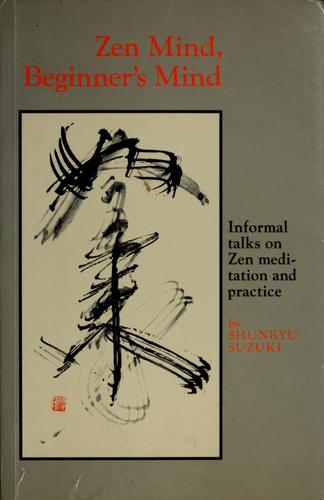
No work in the index was recorded inside a dokusan room. The form is not a public document. What the index carries is the reception literature in which dokusan's working effect is reported at one remove. Shunryū Suzuki's *Zen Mind, Beginner's Mind* collects talks given to San Francisco Zen Center students in the 1960s, in the Sōtō lineage Suzuki carried from Japan. It is the closest English-language transmission of the teishō register that frames the dokusan those practitioners would have entered during the same period. D. T. Suzuki's *An Introduction to Zen Buddhism* and his *Manual of Zen Buddhism* are the earlier twentieth-century scholarly companions through which sesshin and dokusan first reached English readers. The Adyashanti material, including *Do Nothing*, True Meditation, his talk on sudden awakening, and *The End of Your World*, comes closest in the index to the inside experience the form produces. Adyashanti trained in the Sōtō Zen lineage of Maezumi Rōshi and attended sesshin for roughly fourteen years. His post-transmission teaching carries the dokusan register of refusing anything short of genuine recognition into a public format.