What is Satori?
Satori (悟り) is the Zen tradition's term for awakening in its lasting form. Where kenshō names the first breakthrough of recognition, satori names what that recognition becomes once years of continued practice have settled it into ordinary cognition.
The word comes from the Japanese verb satoru, meaning to know or to perceive directly. The Chinese cognate wù (悟) shares the same root, and the compound kenshō-satori (見性悟り), meaning seeing nature, awakening, appears in older Chán records to describe the full arc of the recognition. Kenshō is something one has had; satori is something one has become.
Satori vs. kenshō, bodhi, and enlightenment
Satori is not, on the tradition's own account, a state that can be cultivated by aiming at it. The Rinzai curriculum is designed to provoke a first kenshō and to stabilise the resulting satori through years of further work. The Sōtō curriculum treats the same recognition as already present in correct zazen and is sceptical of the cult that has grown up around the term in the West. Neither school treats satori as an experience among other experiences. Satori is also not equivalent to the broader vocabulary of awakening: the Buddhist bodhi, the Hindu mokṣa, the Sufi fanāʾ, the Christian unio mystica. The family resemblance is real, but the technical content of satori belongs specifically to the Zen lineage's reading of the recognition. The conflation of satori with peak states, mystical experiences, or therapeutic insight is common in Western popular writing on Zen since Suzuki's time and flattens what the term was meant to do. On the tradition's own description, the recognition satori points at is the most ordinary thing imaginable. What is unusual is that the practitioner had not previously noticed it.
The Rinzai use of the distinction
The Rinzai school most carefully preserves the kenshō–satori distinction. Hakuin reformed the school in the eighteenth century, and it is the lineage behind most of what English readers know as classical Zen literature. The graduated koan curriculum Hakuin assembled is designed to provoke a first kenshō on a hosshin (dharmakāya) case, then to deepen and integrate that recognition through the kikan, gonsen, nantō, and goi sequences that follow. Satori is what the rest of the curriculum is working toward. Rinzai records warn repeatedly against treating the first breakthrough as a finished attainment. The phenomena that sometimes accompany an early kenshō, such as heightened states, emotional release, or what the tradition calls makyō (literally demonic states, meaning showy phenomena), are not satori. They are conditions to dissolve, not to cultivate. The post-kenshō work in a Rinzai monastery is more demanding than what came before.
How the term reached English
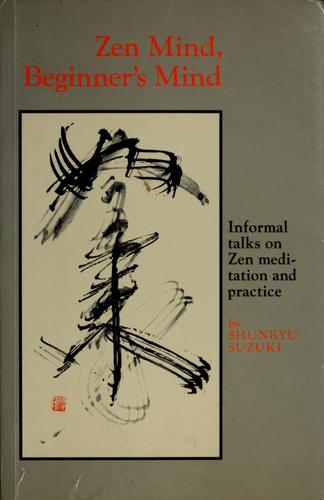
The Zen vocabulary that English-speaking practitioners use today, including zazen, kōan, kenshō, satori, and mu, entered the language mainly through D.T. Suzuki's essays and translations, published from 1927 onwards. Works like the three-volume Essays in Zen Buddhism, the Manual of Zen Buddhism, the Zen Doctrine of No-Mind, and Zen and Japanese Culture, collected as the standard English-language Suzuki, were where the Anglophone reading public first encountered satori as something distinct from the Christian vocabulary of enlightenment. Suzuki tended to emphasise the dramatic, individual quality of the breakthrough. Later English-language teachers have noted that this framing was partly shaped by the audience he was writing for. Alan Watts's *The Way of Zen* built on Suzuki's foundation and, for similar reasons, kept satori prominent. Watts's preface acknowledges that the book would not have been possible without Suzuki's preceding decades of translation. A generation later, Shunryū Suzuki (no relation) brought the Sōtō register to San Francisco Zen Center. *Zen Mind, Beginner's Mind* is quieter about the term, preferring to discuss the practice that the recognition should settle into rather than treating the recognition as a distinct event.
Where to encounter it in the index
Adyashanti's *Do Nothing* is the index's most direct contemporary American treatment of the territory satori names. Adyashanti's fourteen years in the Maezumi-rōshi lineage, a Sanbō-Kyōdan-influenced Sōtō-Rinzai hybrid, sit behind the instruction. His framing treats recognition as the noticing of what is already the case, not the attainment of a new state. That is where the lineage tends to arrive once the kenshō–satori distinction has been worked through. The Plum Village teaching from Br. Troi Duc Niem reaches the same recognition from the Vietnamese Thiền lineage, which descends from the same Chán root. The Japanese term satori is not used in that idiom; the cognate is ngộ. But what the tradition says stabilises after the first opening is structurally the same. The standard English-language Suzuki and Alan Watts on *The Way of Zen* are the textual starting points. The kensho, koan, and hakuin entries map the Rinzai apparatus satori sits inside. The shikantaza and zazen entries map the Sōtō approach, which takes a different stance toward the same horizon.