What is Idries Shah?
Idries Shah (1924–1996) was a British author born in Simla, India, to an Afghan father and a Scottish mother. His 1964 book *The Sufis* became the most-read English-language introduction to Sufism of the twentieth century and reshaped how Anglophone readers understood Persian mystical literature.
Background and self-presentation
Shah settled in Britain and from the late 1950s worked as a writer and lecturer on the Sufi tradition. He founded the Institute for Cultural Research and the Society for Understanding the Foundation of Ideas. He claimed descent from a Hashimi lineage stretching back to the Prophet and presented himself as the transmitter of a live Sufi teaching brought from Central Asia into the West. Academic Sufi studies has not accepted those claims. L. P. Elwell-Sutton's 1975 essay Sufism and Pseudo-Sufism was the sharpest formal critique; others followed. Scholars treat Shah as a gifted popularising author who worked outside the established ṭarīqa (order) structures rather than inside them. A reader does not have to settle the lineage question to find the books useful, but it is part of the context.
The interpretive move
*The Sufis* was published in 1964 with a foreword by Robert Graves. The book treats Sufism not as the mystical wing of Islamic religious life but as a perennial wisdom tradition that took Islamic form in the Persian-and-Arabic world while having counterparts in every culture. This move had two effects. First, it brought the literature to a non-Muslim Anglophone audience that more strictly Islamic presentations had not reached, and which the 1960s counterculture was hungry for. Second, it removed the specifically Islamic doctrinal frame that academic Sufi studies considers load-bearing: the Qur'anic intertext, the relation between sharīʿa and ṭarīqa, and the isnād chains the living orders trace. Aldous Huxley had made a similar move across the wisdom traditions in general with the 1945 *Perennial Philosophy*; Shah's contribution was the Persianate-Sufi version. Academic Sufi studies has criticised this approach on philological and theological grounds for sixty years; the popular readership has not.
The companion reception in English Persian poetry
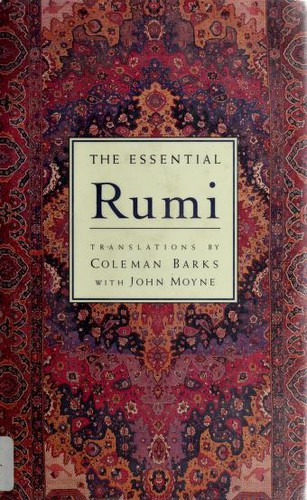
Shah's framing became the interpretive substrate on which the next generation's English translations of Persian Sufi poetry rested. Coleman Barks's *The Essential Rumi*, published in 1995, made the same move on the Rumi corpus: Qur'anic intertexts were largely removed, the Islamic doctrinal setting was softened into a universal devotional register, and the Persian verse forms were rendered into free-verse English. Daniel Ladinsky's *The Gift*, the 1999 Hafiz volume, extended the same approach to the fourteenth-century Persian lyric tradition on even more contested philological ground. Ladinsky has acknowledged that most of the poems have no Persian original behind them. The scholarly alternative runs through Jawid Mojaddedi's Oxford World's Classics translation of the *Masnavī*, which keeps the Islamic and Qur'anic frame intact, and through Henri Corbin's *Alone with the Alone*, which treats the Ibn ʿArabī substrate of the Masnavī with the philological discipline the popularising tradition does not attempt.
The teaching-story method
Alongside The Sufis, Shah published a series of teaching-story collections: Tales of the Dervishes, The Way of the Sufi, Thinkers of the East, and several volumes of Mulla Nasrudin stories. These draw on the Sufi aṭbāq literature and present short narratives as pedagogical tools. Shah's view was that the stories work obliquely. A reader who looks for a moral has misread the text. The story is meant to exhaust the frame in which the question was posed, in the way a koan works on a Zen student. This was his distinctive method across thirty years of writing and teaching. Academic Sufi studies sees a gap between how these texts functioned inside the traditional khānaqāh and how Shah redeployed them; that gap is itself an illustration of the perennialist move the project depends on.
Shah vs. academic Sufi studies and perennialism
Shah's approach differs from academic Sufi studies in its reading of what Sufism is. Scholars such as Annemarie Schimmel and William Chittick treat Sufism as a tradition whose meaning is inseparable from its Islamic doctrinal and Qur'anic context. Shah presents it as a wisdom tradition that transcends any one religion. This is the perennialist position, most associated in the twentieth century with Aldous Huxley. Shah differs from Huston Smith, another perennialist sympathiser, in that Smith engaged extensively with academic religious studies while Shah largely did not.
Why he matters in this corpus
This index is broadly downstream of the mid-twentieth-century Anglophone reception of Asian and Middle Eastern contemplative literature. Shah is one of the two or three figures most responsible for the shape that reception took, alongside Aldous Huxley and Huston Smith. A reader who comes to the Persian Sufi tradition through the dominant popular routes is reading inside Shah's framing whether the source is named or not. The academic tradition reaches the same material through Mojaddedi, Corbin, Schimmel, and Chittick. This index documents both routes and treats the gap between them as one of the interpretive choices a reader of Sufi literature has to make.