What is Gregory Palamas?
Gregory Palamas (c. 1296–1359) was a Byzantine monk of Mount Athos and Archbishop of Thessalonica. He defended the hesychast monks of Mount Athos against the Calabrian critic Barlaam, arguing that God's energies are genuinely divine and directly perceivable in prayer, even though God's essence remains forever unknowable. His Triads in Defence of the Holy Hesychasts (1338–1341) articulated the essence-energies distinction. The Eastern Orthodox Church received this as dogma at the councils of 1341 and 1351.
Palamas, Barlaam, and Aquinas
Three positions are often conflated. Barlaam of Calabria held that God is wholly unknowable and that any experience the hesychast monks reported must involve a created intermediary, not God directly. Palamas disagreed: God's energies are genuinely divine, not created, and genuinely participable. Thomas Aquinas, writing in the same century, held that God communicates through created grace, a position the Palamite tradition treats as closer to Barlaam's than to its own, since it makes the medium of union creaturely rather than divine. Orthodox theologians since Vladimir Lossky and John Meyendorff have read this as the structural divide between Eastern and Western Christian mysticism, though the comparison remains debated.
Mount Athos and the Barlaam controversy
Palamas was born into a Constantinopolitan court family in 1296. His father served the emperor Andronikos II Palaiologos and was himself drawn to hesychast practice in later life. At around twenty Palamas left a promised civil career, retreated to Mount Athos, and spent the next two decades at the skete of Glossia and the lavra of Vatopedi. He trained under elders whose discipline was the psychophysical method of the Jesus Prayer that the hesychast tradition had codified in the previous century. The controversy that organised the rest of his life began around 1335. Barlaam of Calabria, a southern Italian Greek-rite monk who had moved to Constantinople, published treatises attacking Athonite practice. He argued that the uncreated light the monks reported perceiving in prayer could not be God himself, since God's essence is unknowable. What the monks perceived had to be either a created intermediary or a hallucination. He also charged that the breath-paired postural technique the manuals prescribed was a Messalian heresy in patristic dress. The Athonite community asked Palamas, by then the most theologically articulate of their number, to reply. He produced the Triads in Defence of the Holy Hesychasts — nine treatises in three groups of three — between 1338 and 1341. They remain the foundational text of the Orthodox theology of mystical experience.
Essence and energies
The central argument of the Triads rests on a distinction between God's essence (ousia) and God's energies (energeiai). The essence, Palamas argued from the patristic record — Athanasius, the Cappadocians, Maximus the Confessor, John of Damascus — remains forever beyond all created knowing. Barlaam was right about that. But the energies are God's own acts and self-communications, undivided from the essence as a sunbeam is undivided from the sun, and the created order participates in them. The uncreated light of Tabor — the radiance the disciples saw at the Transfiguration in Matthew 17 and Mark 9 — is, on this reading, the divine energy directly perceived, not a created sign of an inaccessible referent. The hesychast monks' experience of light in deep prayer is the same light, made perceptible to the nous by the long discipline of nepsis and hesychia. This distinction is not scholastic hairsplitting. Without it, the Orthodox theology of theosis — the deification of the human person by participation in the divine life — becomes incoherent. The doctrine would either collapse God into creation (a pantheist outcome the tradition has consistently refused) or strand creation forever outside its source. The council of 1341 vindicated Palamas during Barlaam's lifetime. The councils of 1347 and 1351, against further objections from Akindynos and Gregoras, made the position dogmatic. The 1351 Tomos is the formal definition the Orthodox Church has carried ever since.
The institutional aftermath
Palamas was consecrated Archbishop of Thessalonica in 1347. His twelve years in the see were turbulent. A year of his archiepiscopate was spent as a prisoner of Turkish raiders, captured at sea while travelling to Constantinople. The letters he wrote home from captivity are part of the canonical corpus the tradition reads alongside the Triads. He died in Thessalonica in 1359 and was canonised by the Orthodox Church in 1368, nine years after his death. The *Philokalia*, compiled by Nicodemus and Macarius at Mount Athos in 1782, gives Palamas extensive representation in its later volumes. The Philokalia is the main channel through which Palamite theology reached the nineteenth-century Russian renewal that produced the Way of a Pilgrim and the Slavic Orthodox lay practice of the Jesus Prayer that survives today. In the twentieth century, scholars such as Vladimir Lossky, John Meyendorff, and Christos Yannaras brought Palamas back into Western theological attention. The essence-energies distinction is now among the most-discussed structural claims of Eastern theology in the comparative literature.
Where the line surfaces in the index
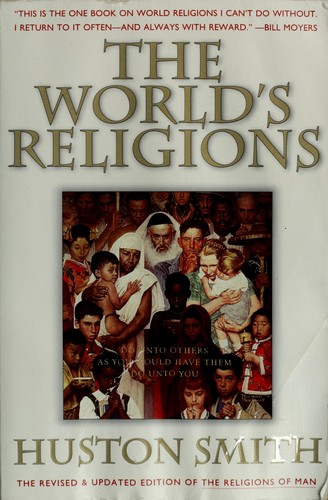
Jonathan Pageau's *Orthodoxy in America* is the index's most direct contemporary entry into the living Orthodox tradition the Palamite synthesis underwrites. His shorter pieces — Fractals — The World Is Full of Meaning, The Real Meaning of Lucifer, Christians Are Not Called to Be 'Nice' — operate inside the patristic frame the Triads defended, even where the technical distinction is not foregrounded. From the Western side the channel runs through twentieth-century Catholic contemplatives who read Palamas through Lossky and Meyendorff: Thomas Merton's *New Seeds of Contemplation* and *Thoughts in Solitude* carry the essence-energies frame at one or two removes in their late-career silence-and-darkness vocabulary. Richard Rohr's *The Naked Now* and his *On Being* conversation read the purgative, illuminative, unitive arc the Palamite tradition assumes as the load-bearing shape of the Christian contemplative life. Huston Smith's *The World's Religions* treats the Palamite synthesis as integral to the Christianity chapter rather than as a sectarian Orthodox footnote.