What is the Philokalia?
The Philokalia is a five-volume anthology of hesychast writings compiled at Mount Athos in 1782 by Nicodemus the Hagiorite (1749–1809) and Macarius of Corinth (1731–1805). It collects Greek patristic and Byzantine authors from the fourth to the fourteenth centuries and is the foundational text of the Eastern Orthodox contemplative tradition.
Nicodemus, a monk of the Athonite skete of Pantokratoros, and Macarius, a former metropolitan in Athonite seclusion, arranged their selections around a single purpose: the interior discipline by which the nous, the contemplative attention, descends from the surface of the mind into the heart and rests there in continuous prayer. The full Greek title is Φιλοκαλία τῶν Ἱερῶν Νηπτικῶν, meaning the love of the beautiful, of the holy ones who practise watchfulness. The five volumes carry roughly forty authors. Nicodemus's reading order is not chronological. It delivers, in stages, the technical curriculum of the hesychast life as the Athonite tradition had organised it by the late eighteenth century.
The Philokalia vs the Jesus Prayer and adjacent texts
The Philokalia is not a single book by a single author and is not read as one. Its roughly forty texts operate at very different levels of technicality and address different stages of the contemplative life. The tradition has always held that the more advanced material in the later volumes is not safe for an uninstructed reader. The orthodox practice is to read the volumes under the direction of a spiritual father who can match the reader to the appropriate texts.
The collection is not a generic anthology of Christian mysticism in the contemporary sense. It belongs to one tradition, organised around one practice, on the terms of one theological framework: the Palamite essence-energies distinction that the late Athonite synthesis took as definitive. Reading it as a buffet of techniques drains it of its purpose. It is also distinct from the Jesus Prayer itself: the Prayer is the central practice the Philokalia serves, but the anthology is the doctrinal and ascetic literature surrounding that practice, not a manual for the Prayer alone.
The translations and the reception
Paisius Velichkovsky (1722–1794), the Ukrainian-born Athonite monk who carried the Greek manuscripts into the Carpathian monasteries, produced the Slavonic Dobrotolyubie in 1793. Theophan the Recluse produced the Russian translation in 1877. Theophan's version is freer and somewhat fuller, reorganised around what he judged the pastoral need of the nineteenth-century Russian lay reader. That Russian text is the operating handbook referred to in the anonymous *Way of a Pilgrim*. The pilgrim's discovery of the Philokalia and his attempt to put the Jesus Prayer into continuous practice carried the corpus out of monastic enclosures and into Russian lay devotion. The English translation by G. E. H. Palmer, Philip Sherrard, and Kallistos Ware (four volumes, 1979–1995; fifth volume, 2023) is the standard text in the English-language Orthodox and contemplative world.
Where the text surfaces in the index
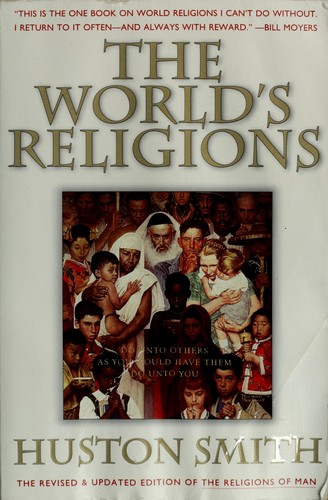
Jonathan Pageau's *Orthodoxy in America* is the index's most direct entry into the living Orthodox tradition the Philokalia operates inside. His shorter pieces, Fractals — The World Is Full of Meaning, The Real Meaning of Lucifer, and Christians Are Not Called to Be 'Nice', all sit inside the patristic and Athonite frame the anthology codifies, even when the practice is not named directly. From the Western Catholic side, Thomas Merton's *New Seeds of Contemplation* and *Thoughts in Solitude* are the late work of a Trappist who was reading the Philokalia and the desert literature in his final decade. Thomas Keating's *Open Mind, Open Heart* develops centering prayer, which Keating distinguished carefully from the Jesus Prayer, though the contemplative literature behind Keating's synthesis includes the Philokalia at one or two removes. Richard Rohr's extended *On Being* conversation reads the purgative, illuminative, unitive arc that the Philokalia assumes as the load-bearing shape of the Christian contemplative life. Huston Smith's *The World's Religions* treats the hesychast literature, including the Philokalia, as integral to the Christianity chapter rather than a footnote.